

Granny Square Guide: Patterns, Tips & Techniques
The timeless appeal of the granny square has captivated crafters for generations, transforming simple yarn and a crochet hook into stunning creations that range from cosy blankets to fashionable garments. This classic crochet motif, with its distinctive openwork pattern and endless colour possibilities, remains one of the most versatile techniques in the textile arts. Whether you're a complete beginner or an experienced crocheter looking to refine your skills, understanding the fundamentals and creative applications of this beloved pattern opens up a world of possibilities for your next project.
The Enduring Legacy of the Granny Square
The history of the granny square dates back to the 19th century, when resourceful crafters developed this efficient method of using yarn remnants. Originally known as the "friendship afghan square," this technique allowed makers to transform leftover scraps into functional and beautiful textiles. The pattern gained tremendous popularity during the 1970s, becoming synonymous with bohemian style and handmade charm.
Today's resurgence demonstrates that this traditional motif has successfully evolved beyond its vintage associations. Contemporary designers incorporate granny squares into high-fashion pieces, home décor, and innovative accessories that appeal to modern aesthetics.
Why This Pattern Remains Popular
Several factors contribute to the granny square's sustained relevance in the crafting community:
- Accessibility: Beginners can master the basic pattern quickly, building confidence through repetition
- Portability: Individual squares are perfect portable projects that fit easily into handbags
- Versatility: The modular nature allows for endless customization and creative expression
- Sustainability: Perfect for using yarn remnants and reducing waste in your crafting practice
- Therapeutic value: The repetitive nature provides meditative relaxation while creating beautiful results
The pattern's forgiving structure means that even slight variations in tension or stitch count rarely ruin the final appearance, making it ideal for stress-free crafting sessions.
Understanding Basic Construction Techniques
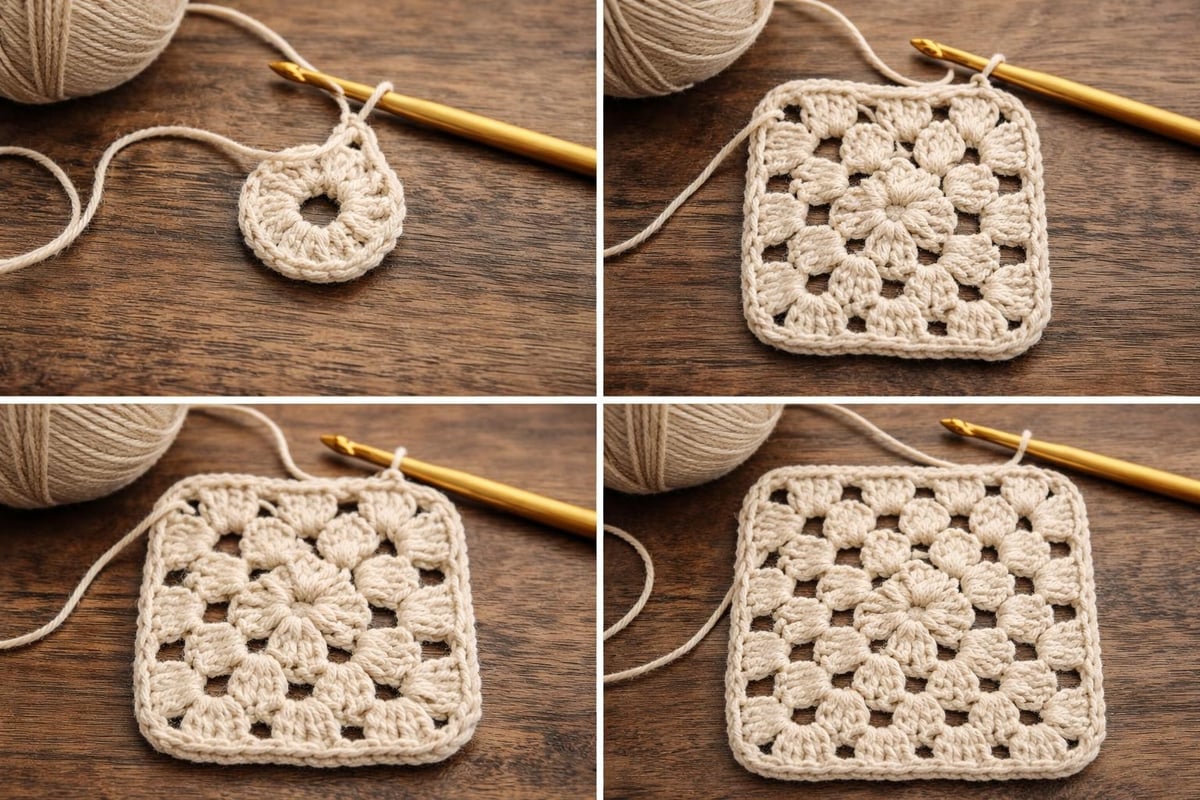
The traditional granny square begins with a central ring, typically formed using a chain and slip stitch or the magic ring method. From this foundation, crafters work outward in rounds, creating clusters of double crochet stitches separated by chain spaces. This construction method produces the characteristic "holes" that give the pattern its distinctive appearance and textural appeal.
Essential Materials and Tools
Selecting appropriate supplies ensures your granny square projects achieve professional-quality results. At Wild and Woolly Yarns, you'll find everything needed to begin your granny square journey with confidence.
| Material Type | Recommended Choice | Purpose |
|---|---|---|
| Yarn Weight | DK or Worsted | Provides clear stitch definition for learning |
| Hook Size | 4.0mm - 5.0mm | Matches common yarn weights appropriately |
| Fibre Content | Wool or Cotton | Offers excellent stitch clarity and durability |
| Stitch Markers | Split ring style | Helps track round beginnings and pattern repeats |
Choosing the right hook size dramatically affects your finished square dimensions and drape. A larger hook creates airier, more flexible fabric, whilst a smaller hook produces denser, more structured results.
Step-by-Step Pattern Instructions
Following a structured approach ensures consistent results, especially when creating multiple squares for larger projects. The step-by-step granny square tutorial provides excellent visual guidance for each stage.
Creating Your Foundation Ring
- Form a slip knot and chain four stitches
- Insert hook into the first chain created
- Make a slip stitch to join into a ring
- Chain three (counts as first double crochet)
Alternatively, experienced crafters often prefer the magic ring method, which eliminates the small hole that remains when using the chain method. This technique provides greater control over the centre's tightness and appearance.
Building the First Round
Work two double crochet stitches into the ring, then chain two. This creates your first cluster and corner space. Repeat this pattern three more times: three double crochet stitches, chain two, creating a total of four corners. Join to the top of your initial chain-three with a slip stitch.
The chain-two spaces become corners where subsequent rounds will increase to maintain the square shape rather than forming a circle.
Expanding Through Additional Rounds
Round two introduces the pattern that repeats for all subsequent rounds:
- Slip stitch to the first corner space
- Chain three, work two double crochet, chain two, three double crochet in same space
- Chain one, move to next corner space
- Repeat corner pattern (three double crochet, chain two, three double crochet)
- Continue around, joining with slip stitch to complete round
Each additional round follows this same principle, working corner increases in chain-two spaces and single chains between corners. As your square grows, you'll work multiple cluster groups along each side, separated by chain-one spaces.
Colour Theory and Design Planning
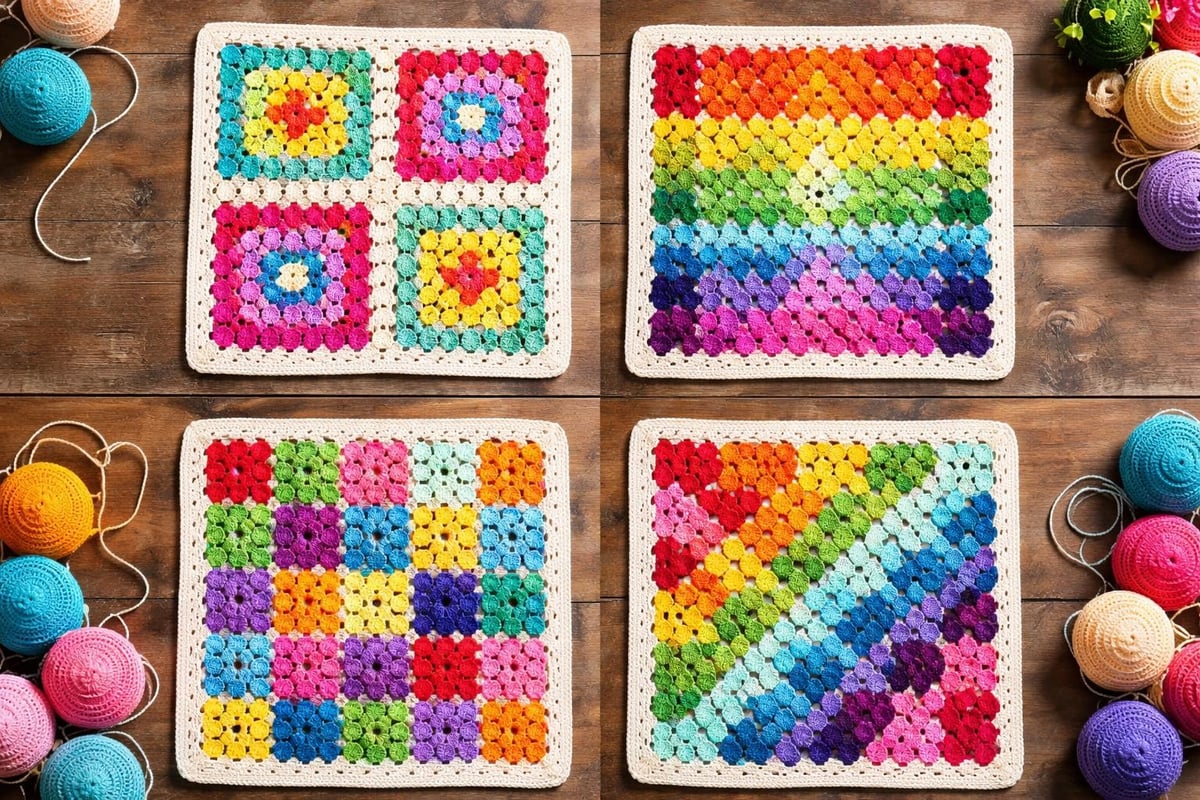
Strategic colour selection transforms simple granny squares into visually stunning creations. Understanding basic colour theory principles helps you create harmonious or deliberately contrasting effects that enhance your finished projects.
Colour Arrangement Strategies
Different approaches to colour placement yield dramatically different results:
Concentric Method: Each round uses a single colour, creating rings of colour radiating from the centre. This classic approach emphasizes the square's geometric structure and allows for striking gradients or bold contrasts.
Diagonal Pattern: Changing colours mid-round creates diagonal stripes across the square. This technique requires careful planning but produces dynamic, unexpected results.
Random Scrap Style: Using whatever yarn comes to hand creates cheerful, eclectic squares perfect for using remnants. This approach embraces spontaneity and celebrates colour diversity.
Monochromatic Variation: Using different shades of a single hue creates subtle, sophisticated squares that work beautifully in modern décor applications.
The knitting tutorials section offers additional guidance on colour selection and project planning techniques that complement your granny square work.
Joining Methods for Larger Projects
Once you've created multiple squares, joining them properly ensures your finished project looks polished and professional. Several methods exist, each offering distinct advantages depending on your project requirements.
| Joining Method | Appearance | Difficulty | Best Use |
|---|---|---|---|
| Whip Stitch | Nearly invisible | Easy | Blankets requiring flexibility |
| Slip Stitch | Textured ridge | Easy | Projects where seams add interest |
| Join-as-you-go | Seamless | Moderate | Large projects to avoid extensive finishing |
| Flat Braid Join | Decorative feature | Moderate | When seams should enhance design |
Blocking for Professional Results
Before joining squares, proper blocking ensures uniform dimensions and crisp stitch definition. Pin each square to your blocking board, matching corners and sides to your desired measurements. Mist with water or use steam, depending on your yarn's fibre content, then allow to dry completely.
Blocking transforms even mediocre squares into professional-looking components. This step proves particularly crucial when combining squares made at different times or with slight tension variations.
Contemporary Applications and Projects
Modern designers have elevated the granny square far beyond traditional afghans, incorporating this versatile motif into fashion-forward garments and home décor pieces that align with current aesthetic trends.
Fashion and Wearables
Granny square cardigans, vests, and tops have appeared on international runways, demonstrating the pattern's fashion credibility. These garments often feature:
- Fitted silhouettes that contrast with the pattern's bohemian associations
- Neutral or monochromatic colour schemes for sophisticated appeal
- Strategic placement of squares to create flattering shapes
- Mixed techniques combining granny squares with other crochet stitches
Accessories offer excellent starting points for incorporating granny squares into your wardrobe. Scarves, bags, and headbands require fewer squares than full garments whilst providing valuable construction practice.
Home Décor Applications
Beyond traditional blankets, granny squares enhance living spaces through diverse applications:
- Cushion covers: Single large squares or multiple small ones create tactile, colourful accents
- Table runners: Joined squares in sophisticated colour schemes suit modern interiors
- Wall hangings: Framed or stretched squares function as textile art
- Curtains: Lightweight cotton squares filter light beautifully whilst maintaining privacy
The gallery at Wild and Woolly Yarns showcases inspiring examples of how crafters have incorporated granny squares into finished projects that demonstrate the pattern's remarkable versatility.
Troubleshooting Common Challenges
Even experienced crocheters occasionally encounter issues when working granny squares. Understanding common problems and their solutions helps maintain project momentum and prevents frustration.
Addressing Shape Distortion
Problem: Your square curves or ruffles instead of lying flat.
Solutions: Check that you're working the correct number of stitches in each corner space. Corners require exactly three stitches, chain two, then three more stitches. Missing or adding stitches disrupts the geometry. Additionally, verify your tension remains consistent throughout each round.
Managing Tension Variations
Inconsistent tension creates squares with irregular dimensions, complicating the joining process for larger projects. Practice maintaining steady yarn tension by:
- Finding a comfortable hand position that you can replicate consistently
- Working at a relaxed pace rather than rushing
- Taking breaks to prevent hand fatigue that affects tension
- Blocking each square to standardize dimensions despite minor variations
Colour Change Techniques
Clean colour transitions enhance your squares' appearance significantly. When changing colours between rounds, complete the final stitch of the old colour until two loops remain on your hook, then pull the new colour through to complete the stitch. This technique prevents the old colour from showing in the new round.
Advanced Variations and Innovations
Once you've mastered the basic granny square, numerous variations expand your creative possibilities whilst building on familiar techniques.
Solid Granny Square
This variation eliminates the characteristic holes by working additional stitches in the chain spaces. The result maintains the square construction method whilst creating denser fabric suitable for garments requiring more coverage or warmth.
Sunburst Granny Square
Beginning with a different centre motif, the sunburst variation creates a flower-like appearance in the middle rounds before transitioning to traditional corner increases. This adaptation adds visual interest whilst retaining the fundamental construction principles.
African Flower Hexagon
Though technically not square, this related pattern uses similar techniques to create hexagonal motifs. These can be combined with traditional squares or joined exclusively for unique project shapes.
Granny Stripe Pattern
Rather than working in joined rounds, the granny stripe uses the same stitch clusters in continuous rows. This creates rectangular fabric perfect for blankets, scarves, or shawls without requiring individual square construction and joining.
Yarn Selection Considerations
Your yarn choice significantly impacts both the working process and finished appearance of granny square projects. Different fibres offer distinct advantages depending on your intended application.
Natural Fibres
Wool: Provides excellent warmth, elasticity, and stitch definition. The fibre's natural memory helps squares maintain their shape through use and washing. Superwash wool offers easier care whilst retaining most traditional wool characteristics.
Cotton: Creates crisp stitch definition and breathable fabric ideal for summer garments and home décor. Cotton squares hold their shape well but lack the elasticity of wool, making them perfect for structured projects.
Bamboo and Silk Blends: Offer luxurious drape and subtle sheen, elevating granny squares into elegant, special-occasion pieces.
Synthetic and Blended Options
Acrylic yarns provide budget-friendly options with easy-care properties, making them practical for frequently-washed items like baby blankets or pet bedding. Modern acrylic formulations have improved significantly, offering better softness and drape than earlier versions.
Wool-acrylic blends combine natural fibre benefits with enhanced durability and simplified care requirements. These versatile options suit most granny square applications whilst offering good value for larger projects.
When visiting a quality yarn store, you'll find expert guidance on selecting appropriate fibres for your specific project needs, ensuring optimal results from your creative efforts.
Mathematical Precision in Pattern Planning
Successfully completing larger granny square projects requires careful calculation and planning. Understanding the mathematics behind square dimensions and project requirements prevents mid-project material shortages and ensures proper finished sizing.
Calculating Yarn Requirements
Determining total yarn needs involves several factors:
- Measure your yarn usage for a single square sample
- Calculate total squares needed based on finished project dimensions
- Multiply individual square requirements by total quantity
- Add 10-15% extra for tension variations and errors
Keep detailed notes throughout your first square, recording exactly how much yarn each round consumes. This data proves invaluable for accurate project planning.
Determining Square Quantities
For rectangular projects like blankets, divide your desired finished dimensions by individual square size (after blocking). Remember to account for joining method, which may add or reduce final dimensions depending on technique selected.
Sustainability and Yarn Management
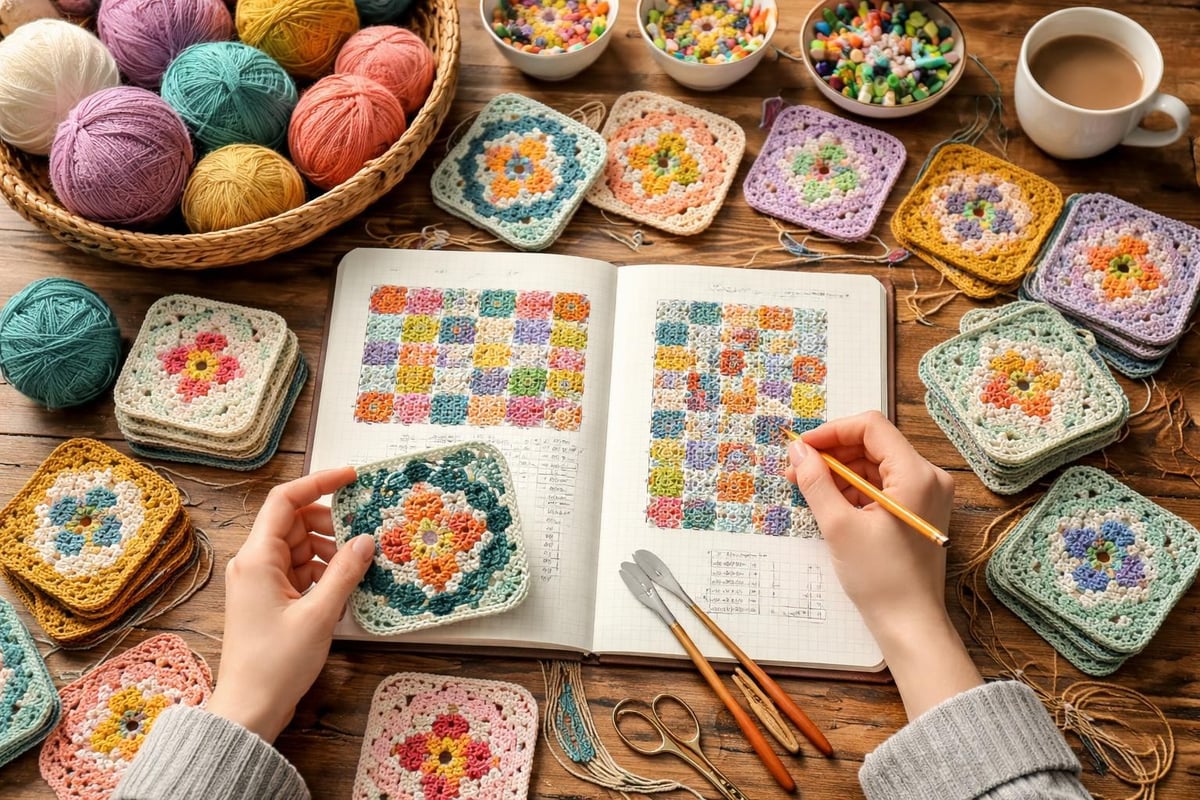
The granny square's traditional role as a scrap-friendly pattern aligns perfectly with contemporary sustainability values. Modern crafters increasingly seek ways to reduce waste whilst creating beautiful, functional items.
Organizing Remnants Effectively
Implementing systems for storing and categorizing leftover yarn facilitates scrap granny square projects:
- Sort by weight to ensure compatible yarns within projects
- Organize by colour family for easier palette planning
- Label quantities to assess whether remnants suffice for planned projects
- Store in clear containers for visual inventory assessment
Planned Scrappy Projects
Rather than completely random colour placement, planned scrap projects follow structured colour schemes whilst using remnants. This approach combines sustainability with intentional design, creating cohesive finished pieces that celebrate rather than disguise their thrifty origins.
The about us page at Wild and Woolly Yarns reflects a similar commitment to sustainable practices and supporting the knitting community with quality materials and expert guidance.
Teaching and Learning Resources
Whether you're teaching yourself or sharing knowledge with others, quality instructional resources accelerate skill development and prevent the frustration of unclear directions.
Video Tutorials
Visual demonstrations clarify techniques that written instructions sometimes obscure. The beginner-friendly granny square video tutorial provides clear, step-by-step guidance that beginning crocheters find invaluable.
Written Patterns and Charts
Different learning styles require varied instruction formats. Some crafters prefer detailed written instructions, whilst others work more successfully from visual charts that display the pattern's structure graphically. Familiarizing yourself with both formats expands your pattern access.
Community Learning
Joining crochet groups, whether online or in-person, provides support, inspiration, and troubleshooting assistance. Sharing your work and receiving feedback accelerates improvement whilst building connections with fellow crafters who understand your creative passion.
Adapting Patterns for Special Occasions
Customizing granny squares for specific events or recipients adds meaningful personal touches that transform handmade items into treasured keepsakes.
Colour Symbolism
Selecting colours with intentional meaning enhances gift-giving:
- Wedding gifts: Traditional white and cream or the couple's wedding colours
- Baby items: Soft pastels or vibrant primaries depending on aesthetic preferences
- Holiday décor: Seasonal colour schemes that coordinate with existing decorations
- Team spirit: School or sports team colours for superfans
Sizing Considerations
Adjusting square dimensions and project scale suits different recipients and purposes. Miniature granny squares create delicate jewellery or ornaments, whilst oversized versions produce dramatic statement pieces.
The granny square's enduring appeal stems from its perfect balance of accessibility, versatility, and creative potential, offering crafters endless opportunities for self-expression and skill development. Whether you're creating your first simple square or designing complex, multi-square garments, this classic technique rewards your efforts with beautiful, functional results. With over 40 years of experience supporting the knitting and crochet community, Wild and Woolly Yarns provides all the yarn, tools, and expert guidance you need to bring your granny square projects to life. Visit us today to explore our extensive yarn selection and discover the perfect materials for your next creation.